Recent Posts

Showing posts with label Negotiation. Show all posts

December 07, 2011

THE CAR QUEST. Part 2. Have an Identity Crisis

.


I read the behind-the-scenes Edmunds series. I studied specs and reviews of dozens of cars. I talked to friends who drive my top candidates. I knew my budget. I knew what general features I most wanted (leather), what was optional (moonroof -- sigh.) and what I'd skip (spoilers, GPS).

I was ready.

Except for one thing.

Which car did I most want??

Which really translated into: WHO AM I??

source: Round About Show

For some people a car is wheels and a seat. They think it says nothing about them.

I say, that says something about them.

I'm the kind of person who gleans meaning from a hairstyle, the kind of cocktail someone orders, a person's ringtone or lack of one.

So am I a mid-career professional looking to impress someone, anyone, with her ride? For a while I started to think so, but then I realized there's no one to impress but myself (and my pocketbook), since I don't usually do business with image conscious types. Forget that.

Am a mother (not yet, but buying a car with that in mind) looking for a roomy backseat and a quiet cabin, perfect for sleeping triplets? (Hey, gotta be ready for anything!)

Or am I an ambitious young professional looking to maximize gas mileage, zip through traffic in a cute little thing and be comfortable along the way?

Do I love to pass people on the highway? A little too much.

Would I be comfortable driving something boring safe and slow, in exchange for a roomy interior and cruise control? Er, maybe!?

So there it was, an identity crisis -- sporty, stately, kid friendly, city friendly, all or none of the above?

Mr. A tried to help. He knows a ton about cars, and he knows a ton about me. :) He drives a Civic and has been very pleased with it. I asked him to help me narrow down which of the following cars packs the best balance of sexy features, comfortable drive, affordability and a solid repair track record.


Recap:

Me: What do you think between the Mazda 3 or 6, the Hyundai Elantra, a VW, a Toyota, a Volvo, another Nissan, or, what else?

Him:  How about a Honda Civic?

Me: I tried one and didn't really like it. It was a 2012 model, and those are getting bad reviews.

Him: How about a 2011?

Me: No, I want something... different. More energetic, more alive.

Him: Like a Civic? It's super reliable. You'll never see them on the side of the road.

Me: I think I'm leaning toward the Elantra.

Him: Why don't you test drive a 2011 Civic and we'll go from there?

Me: Thanks, darling! I think we narrowed it down!

Next step: Unleashing the internet negotiation elves.

THE CAR QUEST. Part 1. Watch A Witty Video

.


It's been a month since I almost bought Toyota Camry, and I was hoping to kick off this series with good news about a new dark red sedan I bargained down to the price I was shooting for. Instead, my wizened white Nissan is still chugging along and I haven't yet found the right car for the right price. 

But I'm a lot closer!!

Here is my approach, so far.

Part 1. Research

source: Consumerist

I've spent months looking at cars, test driving, figuring out my needs and wants, and reading about how car sales work and how to negotiate.

Here are the three most useful shopping tools I've found.

1. Truecar.com suggests a car's price based on what people have actually paid and gets dealers in your area to offer a lower than MSRP price online. Not necessarily the lowest you can go, but definitely a better place to start.

2. In this video, Rob Gruhl teaches aspiring hagglers some car buying ninja tricks. Witty and informative. Worth every second.


3. And in this series of articles on Edmunds, "Confessions of a Car Salesman,"a reporter goes undercover to learn the insider tricks of car dealerships. For example, remember that worksheet they always bring out with four squares? Here's how dealers use it to squeeze you out of every cent you can pay:

The next step in my training involved the use of the "4-square work sheet." Michael told me the 4-square was my friend, it was the salesman's tool for getting "maximum gross profit." As the name implies, the sheet is divided into four sections. When you have a prospect "in the box" (in the sales cubicle) you pull out a 4-square and go to work. 
[...] 
The process begins by asking the customer how much they want for a monthly payment. Usually, they say, about $300. "Then, you just say, '$300... up to?' And they'll say, 'Well, $350.' Now they've just bumped themselves $50 a month. That's huge." You then fill in $350 under the monthly payment box. 
Michael said you could use the "up to" trick with the down payment too. "If Mr. Customer says he wants to put down $2000, you say, "Up to?" And he'll probably bump himself up to $2500." Michael then wrote $2,500 in the down payment box of the 4-square worksheet.
I later found out this little phrase "Up to?" was a joke around the dealership. When salesmen or women passed each other in the hallways, they would say, "Up to?" and break out laughing. 
The final box on the 4-square was for the trade-in. This was where the most profit could be made. Buyers are so eager to get out of their old car and into a new one, they overlook the true value of the trade-in. The dealership is well aware of this weakness and exploits it. 
The opening numbers were now in place on the 4-square. At a glance, Michael said, you could see the significant numbers of this deal — purchase price of the car, trade-in, down payment and the monthly payments. As you negotiated you could move from box to box, making progress as you went. It allowed you to sell a car in different ways. For example, if the customer was determined to get full value for his trade-in, you could take extra profit elsewhere — in the purchase price or maybe even in financing. 
The first numbers that go on the 4-square come from the customer. The down payment and the monthly payment are only what they would like to pay. Now, it's time to get the numbers that the dealership would like the customer to pay. These numbers are called the "first pencil" and they come from a sales manager in the tower. Michael said that the first pencil was the dealership's starting position. "You have to hit them high," Michael explained. "You have to break them inside — make them understand that if they want our beautiful new car, they're going to have to pay for it." 
[...] 
This reminded Michael of something and he laughed. "Here's another thing. Never give the customer even numbers. Then it looks like you just made them up. So don't say their monthly payment is going to be $400. Say it will be $427. Or, if you want to have some fun, say it will be $427.33."

The whole series takes a while to read through, and it was written 10 years ago, but it was a worthwhile education. (More on the Four Squares of Death at the Consumerist.)

So that was my basic training. Next step, deciding which car to buy.

November 07, 2011

Annual performance review time? Read this before you meet with your boss

Source: art.co.uk

Lisa Gates has a powerful new post up at Forbes

She tells the story of a woman who obtains a few choice concessions at work by asking for them -- telecommuting and bigger, better responsibilities. But then, as soon as you can say "annual performance review," her boss decides things aren't working out and takes back those perks. He also tables the discussion of her raise.

Before you call him a jerk, consider what the employee should have done differently. Here's Gates's post. At the end she provides a script for how the situation should have unfolded. 

Have you turned a "no" into a "yes" at work? Care to share any tips with the rest of us?


Back to car negotiations in the next post.

November 03, 2011

How I almost spent too much on a car I didn't want

I write to you as the proud owner of a...

1995 Nissan Maxima.

That's right. After a day of test drives and dealer chats, and several weeks of research and calculations, I drove away last Saturday from a Toyota dealership with my old car... and a big load off my shoulders. I started the day sure I'd buy a car, or at least come very close. What went wrong? It was a combination of 3 things:

1. I didn't get the price I wanted.
2. I didn't get the price I wanted.
3. I didn't get the price I wanted.

Mr. A and I visited four dealerships, test driving and talking numbers: Hyndai, Honda, VW and Toyota. Some salesmen were eager to negotiate, and others were as starchy as their shirt collars. The day ended in a Toyota showroom, where negotiations broke down over a big comfy Camry and we were invited into the sales manager's office for one last attempt.

"So you've been here for HOURS, TRYING to buy a car," the manager said, like the high school principal who pops in on detention challenging his problem students to behave. Drained, disgusted, but institutionally trained to persevere.

"Oh, and here I thought you were trying to sell us a car," Mr. A answered. Good one, amore!

"I see there's a difference of (he looked down, calculating)... of $500 between the figure you wrote down and what we're asking. Over the life of the car, that's $7 per month. Now you're a coffee drinker, right?"

"I am," I answered.

"So give up two lattes a month! You want to walk away over $7! That's NOTHING!"

"If it's nothing, why don't you go for the price we wrote here?" I asked, pointing to the figure.

"I'm giving you a great deal here."

"Not good enough."

"I'm not going any lower. That's my final offer."

Thoughts raced. Should I go for it? Was it a good price? It was so close to the price I told them I wanted. But it didn't feel right. Was I wrong? We'd gotten them to drop from $23,500 to $19,500. But the car had some features I didn't want, which I'd still be paying for. And it was a 2011 model, which I was confident another dealer would be willing to offload for less as next year's cars arrive. And, between you and me, I wasn't really into that car. Not enough to deserve spluring.

"Thanks but no thanks."

We walked out and I suddenly felt liberated. I had come this close to buying a car with features I didn't want for more than I wanted to spend.

Five minutes later, he called back offering to lower the price by $250. I passed.

In the next post, a few reflections, resources and suggestions.

February 13, 2011

Day 5 of 30: Super duper discount on gorgeous antique wedding rings?


A few months back, I outlined the terms of The Wedding Asking Challenge: Try to negotiate every essential component of the grand fete. Exceptions will be made for exceptional values. Money saved will be invested, not turned into sangria the weekend after the wedding. (Actually, that does sound tempting...) Bottom line: I refuse to pay the bridal premium -- to the best of my ability. For, like any lass in love with dusty rose and silk organza, I may end up springing for a few little luxuries just because it's my wedding.

Swooooooon!

A recent objective has been to find wedding rings. I looked online and in department stores including Bloomingdale's. I stepped inside a few insipid chain stores and made a rapid u-turn (Whitehall, Zales and the like) and I spent a good 10 minutes inside one super mega discounter. The lowest price I could find there was $450 for his n' her simple yellow gold bands. Online, Overstock and Amazon had some sets for around $350 with the width and carat that worked. But while Mr. A liked the idea of expedited shipping, I wasn't convinced.

Then Alex, who is half of a fantastic couple Mr. A and I have befriended over the past year, told me where she found her stunning white gold Edwardian wedding band.

The man with the treasure box.

There this antique store in Ocean Beach, a neighborhood in San Diego lined with second hand delights, where a nice man has a treasure box  FILLED with gorgeous rings. Antique rings, diamonds and silver and ruby. 

For INSANELY low prices.

If she were typing, I bet Alex would have used ALL CAPS to convey her devotion to and enthusiasm for this place. So I think it's fair to do the same.

Today, I went in with Mr. A, and her words rang true. It was AMAZING!!

Ken, the ring man, took out the solid little box that must have contained around 300 rings. He told me to take a handful, put them on the counter and sort them into "no" or "maybe." I couldn't believe what I was seeing: An exquisite gold and diamond band for $65. A delicate garnet solitaire on a 14k gold band for a pittance. One ring from the 1890s which I won't describe because it was so beautiful. And so cheap. And so mine. Wait. Wedding bands. Self control. Self control.

Mr. A started valiantly by my side, but after about 70 rings he took off to check out the vintage telephones and gadgets.

Meanwhile, I went through the box and ended up setting aside about 20 "maybe" rings. I separated those into "Not really" "Maybe maybe" "Possible" and "Probable."

Next we looked for matching rings for him, and that further narrowed the options down. All were yellow gold and simple, with at most a milgrain design on the rim.

As I was trying them on again, Mr. A found something unbelievable: a ring from 1880. Inside, the worn inscription read "June 30, 1880" beside two sets of initials.

"I love the 1880s!" I exclaimed. (It meant it. Of all the decades of the 19th century, I have a strong preference for three: the 1830s, the 1850s and the 1880s. For aesthetic reasons, mostly. And a few technological / legal / political reasons, too.)

"My friend in Spain lives in a house from the Roman times. The walls are Roman and the roof was from 1650. So he'd say 1880 is like new. But for these parts, that ring has history," Ken told us.

That ring was also more expensive than the rest -- $195. It still cost less than most rings of that size and weight I'd seen anywhere else, but more than the others in this store. Mr. A found an almost identical band (which would have to be resized, adding an another $30 or so) and we agreed it was time to make the purchase. Which meant it was it time to ask.

"Can you give these to us for a better price?"

"No. I absolutely cannot. On gold, I don't negotiate one bit."

Whaaaaaa?

Ken!? Kenster, Kenerino, my buddy, my friend? We'd been talking for at least an hour about rings, and design, and history, and weddings, and married life, and male/female ring choosing rituals. (FYI: Women spend hours imagining what each ring will say about them, about their relationship, how the ring will sit on their hand at age 80. Men just grab the simplest thing they can, as fast as they can, and hit the door.)

That was the last thing I expected, in the heart of Ocean Beach. This was negotiation central! I'd bargained down things left and right in this neighborhood, for years! But come to think of it, the shopper right before me tried to get the price down on another ring by asking to pay cash and skip the tax. Ken refused.

"I'm sorry," he said. "I just don't negotiate for gold or silver. My prices are already lower than anything else you'll find."

Indeed, as I was inspecting the rings, he mentioned that whatever he pays for an item, he doubles to set his price. The standard jewelry retail markup is five times the wholesale purchase price, not double, said he. "I keep my prices low because I'm not like the other guys. They want to sell you one big ring, once in your life. But me, I know there are anniversaries. And birthdays. And babies coming. I want to be the place you come back to again and again."

Ken seemed to really know his business and love his work. And when he looked into my eyes to answer questions, his gaze was unflinching. I trusted Ken. I wanted to buy my wedding ring from him. I could tell Mr. A felt the same way.

We stepped aside and conferred. There was another set of rings, also lovely, but without that patina. Those other rings fit us perfectly, so we wouldn't have to resize anything. Together, they would be $60 cheaper than the antique set. (Or $90 cheaper, if you counted the sizing.)

"What's $60 over the course of a lifetime? Get the one you want more," Mr. A told me.

"Yes, but marriage is also about being responsible, not giving in to whimsy."

"That's true too. But please, don't hold back because of the price."

I kept trying them on, asking him to try them on, even placing them on his finger myself to see which one slid more willingly, in preparation for that sacred moment in the church...  I just wasn't sure, I wasn't sure... but the more I thought about it, the less I felt I wanted the old, expensive ring...

And then Mr. A shared one more thought: "Actually, I feel that if you want history, you should find it in your family. We will make our own history."

With that, we purchased the rings we preferred. No negotiation, but I am certain we made the right decision.

Closing thoughts:

1) Buyers: Before negotiating, distinguish between emotional/sentimental purchases and impulsive ones.

By 'emotional' I don't mean hormonal or impulse driven, but those that are guided by sentiment, nostalgia, desire, or any other warm and fuzzy feeling. Emotional attachment is worth something. Impulse, not so much.

If the age/year truly mattered in my conception of marriage, then that 1880 ring would have been worth the extra money. But Mr. A's probing comment made me realize what truly matters to us: starting something fresh. I can get something from 1880 -- a map or a book. It doesn't have to be my wedding ring when there's something equivalent in quality and comfort, for less money.

Same goes for any other purchase you ascribe a certain sentimental value to: your first home, the pen you'll be proofreading your novel with, the hotel you stay at the day you accept the Oscar (and other big moments we all routinely face): What matters, truly, and what's just impulse? What connection to that object, experience or service will give you a lasting dividend, and what will fizzle by dawn? Knowing this will help you know when to put your money down and when to walk away.

2) Sellers: When you offer something of true and legitimate worth, not lowering your price can make the buyer value you even more. 

This depends on how you do it. Ken spent a whole hour proving to me, in subtle and obvious ways, that his jewelry is worth every cent. Since he also knows his product is worth every cent, he refused to budge. In a way, that makes me prize the rings even more: I know I got a good deal, because I got a great value.

Lost: One negotiation victory.

Gained: Took one more step toward turning my treasure of a fiance into my husband.

image: ffffound.com

Day 4 of 30: Rule #281 of negotiation: Persevere!!! (And if that fails, grovel.)

My new umbilical cord.

Saturday morning, Mr. A and I had an hour to kill before I was heading to a cupcake tasting and he was going to do some errands. 

"Let's get you a new phone!" he said with the glee of an engineer about to spend the next six hours fondling tiny, shiny smartphones.

"Ok," I answered, with the resolve of a woman determined to make the trip last shorter than an hour.

(My old phone stopped charging and it freezes a few times per day. For the past two weeks I've been holding the charging wire into the phone and pressing it down with my thumb. It was time.)

We went to the Sprint store near our house, and there the decision came down to two Blackberries: the Curve and the Bold. If you ask the experts and forums and chip processors, there's a world of difference between these phones. Screen resolution! Processing speed! Megapixels! Network capabilities!!

But between you and me, they were exactly the same thing, with one exception: the Bold was $200 more, and it had a better keyboard. 

Is a better keyboard worth $200?

I was actually torn, because I type A LOT on my phone. As a reporter, I sometimes take interviews or notes on my Blackberry, if for some reason a notebook isn't accessible or strategic. I tweet for clients, I spend a fair amount of time on Facebook... I get unlimited free text messages -- and I use them. I'm like a tween with a Roth IRA and a house lease.

We quickly checked prices online and saw the Bold was on eBay for $190. Not a great bargaining chip.

"Would you do a better price if I paid cash?"

"I can't do that, sorry!" 

By then J, the salesman, had spent half an hour showing us phones. He really wanted to close the sale. So I said we'll pass, took Mr. A's hand and started walking away.

And then I turned around and quickly asked, "Well what's the best you can do? Because $200 is more than I expected to pay coming in today. But if you can make me a great deal, I will walk away with the phone right now."

"I can't give you a discount on the phone. That's not where I have the option. But here's what I can do: If you stock up on accessories, that's where I can definitely cut you a deal!"

"I'm listening."

"If you buy the car charger, the Bluetooth and the carrying case, then I can do it for..."

Mr. A cut in. "You have a Bluetooth headset. You have two. You never use them." 

But maybe I should get a case, to get a bigger discount? Wait a minute! Buying more things to get a better discount is not the way to save money. I really did not need a case.

"No Bluetooth, and no case. How much is the charger?"

"$35. But if you get the phone, I can give it to you for $20."

"We'll take it."

As J started on the paperwork, I started regretting settling so quickly. $15 off of a $235 purchase? Not bad, but still: I should have asked back. These retorts started buzzing around in my head:

a) "$220 for both is a good place to start, not finish." Smile. "Now how can we get that combo down to $200?"

b) "Thanks, but I'll be honest, I'm not biting yet. That's not even 10 percent off. This is a big purchase -- can you knock off $20 from the phone or charger -- whatever is easier for you?"

c) "$15? How about you throw in the charger for free?"

d) "If you're interested in selling accessories and extras, how about this: If you can give me a 10 percent discount on my bill for the next six months, I will buy the phone and charger at full price."

e) "Is there anything else you can do to bring the price down? Talk to your manager or maybe let me ask him?"

f) "I think we're going to think about it... I just don't have that kind of money after all. Sorry to waste your time!"

Ah! Why did I cave so quickly?!

The transaction was almost done. J finished inputting my info and was about to run my card, when out of nowhere I blurted, "Can you please please please please please please please do the charger for $15? Not $20? I have this compulsive need to negotiate and I feel like $20 off would be so much better."

He looked at me and squinted. Not annoyed, it seemed... just, evaluating...

"Sure. I can do it for $15."

"Oh my god! Thank you!! Do you think I'm the most annoying customer in the world?"

"No. I understand. $200 is a lot to spend on a phone. I understand why you're negotiating."

Gained: $20. (Also, hit my original target of 10 percent off the phone value -- even if it was deducted from the charger.)

Lost: 2 minutes of negotiating: 1:45 in the first conversation, and 15 seconds in the groveling segment.

Reflections:

1) When I told him no Bluetooth and no case, he still gave me a deal on the charger. That shows he was very willing to negotiate. I'm glad I didn't assume buying all 3 was a prerequisite for a discount!

2) I sometimes must remind myself that buying more JUST to get a bigger discount is no deal. I just wanna make that explicit, here, since I almost fell for it.

3) If you don't care how awful you look, negotiating in this style is easy! Not sure how effective in the long run, but this time it worked. If you have an ounce of pride, though, there are ways to be a lot more classy than whining please please please please please please please please! That's something I'll be exploring in the next 26 days of daily asking.

Now it's your turn: I invite you to think of something pricey you'll be purchasing soon (next six months) and leave a comment with one argument you can make for bringing the price down. Regular commenters, I always welcome your contributions! And if you're shy or lurking on the blog, I'd love to hear from you. 

Please please please please please please!

February 03, 2011

The golden rule of effective negotiations


Really sexy blog post title, right? Back when I was asking daily, the post titles had to do with the things I was requesting day in and day out. Can I ride your segway scooter? Can I try your onion ring?

These days, posts are a bit more practical, but no less exhilarating. Take this example:

A few weeks after I learned about how hard it is to price services when you're a freelancer or independent contractor, I got a chance to redeem myself. This time around it was with a new client for a kind of job I'd done many times before. But there were still some challenges in figuring out the project fee:

1) I wasn't sure what the client's budget was, and this matters since I liked the work, I liked the supervisor and if we found a mutually agreeable rate, I wanted this to be a long term relationship.

2) I'd done that kind of work before in house, but never as a contractor.

3) We talked about money before I started the job but didn't come to an explicit agreement by the time I finished. This was totally 'my bad.' The employer said, "What should I pay you?" and I said I'll give an estimate, but instead I jumped in, exhilarated to get started and curious how this assignment would evolve. And then, before you could say "sign on the dotted line" the project was done. Boom. And I realized we never agreed on a fee. Ak.

Here's how I went about making the best of this situation.

1) To cover my bases, I did something I've never done before: I called people and flat out asked what they pay for that kind of work.

I didn't give away the name of the employer, but I described what I was doing and what my background is (in-house, now freelance, x-hour project with y results). And then I asked, "What do you pay for this kind of work?" They were friendly. Forthright. Insightful and nuanced. ("Depends on if it's a public or private employer." "What city are you in, if you don't mind saying?" "Tell me more about the tasks you did on a daily basis.") Almost like they get that kind of question twice a week. I couldn't believe it. I emerged with a range, and I had a target place in that range.

2) With this info, I felt very comfortable approaching my client. I apologized for not finalizing money before the work got started and said I'm sure we'll come to an easy agreement. The client asked what I wanted, I summarized what I did, about how long it took me and what the results were, and countered with, "What do you think is reasonable?" The client told me a figure. It was perfect. And by perfect, I mean exactly what I was hoping for.
 
The golden rule

Now that I think about it, there's one more step I took that ensure this transaction ended happily. It's more important than anything else I did in this case, and a completely lucky break. 

Long before talking or thinking about the work involved or the compensation, I made one right move: I chose a client who was honorable and trustworthy. Maybe this seems like obvious good move to you, gentle reader, and in retrospect it's a huge DUH, but trust me: as I've been evaluating clients, wondering which projects to take, I haven't been asking, "How likely is this person or firm to want to pay me fairly?"

After this experience, I've decided I'm going to ask that, of myself, before any discussions of rates or terms. It won't make or break a deal, but I hope that hunch will help guide me (with a dose of skepticism and an open mind, of course).

In this case, the client made it clear from the start that my work will be valued, and I didn't have a moment of doubt that I would be compensated adequately. If you start with that assurance, there's little that can go wrong.

Even in situations when you don't have that assurance -- and let's face it, in most situations you truly do not -- you can ask yourself "How would this negotiation end, in a perfect world?" and work toward that. Think about more than money, and if you want a long term relationship, aim for an outcome that works for both parties.

As for more antagonistic situations, like the dog eats dog world of projects and bidding and demanding clients and underselling competitors... well that's something I'm sure I'll experience as my business grows. For now I am thrilled to be working clients who, for the most part, fall in the former category -- honorable, worthy of respect and who respect my time and talent -- and I look forward to serving them in the future.

I leave you with a resource, a thought and a question:

For further reading:

When to make the first offer in negotiations, from Harvard Business School

A reflection: 

Maybe I should have countered and asked for more, on principle. I am The Daily Asker, right? I decided not to, for two reasons. If they paid me my target right off the bat, the amount I could have reasonably raised it -- say 10 or 15 percent -- by countering would have been trivial for a short term job and left a bad aftertaste (or so I felt). I felt they put their best offer on the table, and I wanted to reward that rather than quibble over a few dollars per hour. Second, I already sensed we'd be collaborating again, and each contract is subject to a new discussion.

Question:

Would a man have counter-offered? They say "Women Don't Ask" and men are aggressive about getting the best possible salary. I'd love to hear from male readers (or women who set salaries for male employees): What would a dude have done?

image source: http://jeancaton.net/coaching/

September 16, 2010

Finding your negotiation style


The neighbors have been screaming all morning.

"Mamma! Why do keep asking me 'Where are you going? Who are you meeting?' Stop trying to find out everything about me!"

Muffled sounds from an older woman, and then the shrieks again.

"Maaaaamma! Leave me alone!"

Doors slam.

Silence.

**

A car stops in the middle of a narrow street and waits. And waits and waits. Behind, a line of cars grows. Manual transmission, uphill. Not fun for those drivers. Finally, a man jumps out of his Range Rover, bounds up the hill and starts screaming.

"Who the f*ck do you think you are! What ever gave you the idea that it was ok to park your *ss in the middle of the street and keep the rest of us waiting! Move NOOOOOOW! NOOOOOW!"

The car moves.

Traffic jam: finito.

**

A man tells his business partner:

"Shut up!! Why do you keep butting in? BE QUIET!!!"

The partner obliges.

**

A merchant in a food cart screams at two tourists in a language they don't understand.

"This is the part where I tell you to GO F*CK YOURSELVES! Morons!!"

The couple, German or British, by the looks of them, wander away, confused and suspecting the merchant is upset for some reason.

**

Conflict resolution, Italian style.

I'm in Rome now, and I've been amazed at the amount of yelling that happens in this city. I've been here before -- spent three summers working, and I've come back on vacation a few times since then. But either I hadn't noticed, or I've forgotten, how vocal they get here.

About traffic, and interruptions, and tourists who don't understand they can't pay with a credit card (or who knows what offense that couple committed).

But yelling is one side of the coin. The other side is the soft, subtle 'arranging' Italians do. You help my daughter find work. I'll make sure you get your building permit. Not so much a quid pro quo as loose network of accords, agreements and connections.

Not that different from America, really.

When I finished my year of daily asking and did a statistical analysis of the data, I was interested in a range of practical questions. Is it better to ask impulsively or in a planned fashion? Did I fare better when I was alone or accompanied? Is asking sweetly or aggressively more effective?

(For any newcomers to this blog since then, the results and my take on them are on this page: Ask-o-logy. I'm no statistician, but Mr. A has an advanced degree in a field that lets him spin numbers like taffy. Hint: the posts are in reverse order, so scroll to the end and move up.)

One question that developed in the first few months of asking daily, first subconsciously and eventually quite overtly, was HOW it's best to ask. Of course, the situation may dictate or suggest a method, but were there some modes generally better suited to asking success than others? Here's what I found out: I was far more successful being nice than any other approach.
(more details here). And over time, my personality as an asker developed to play up that feature. Now when I ask, I innately make eye contact, take time to establish a rapport whenever that's possible, and humanize myself and the other party. It makes all the difference.

Now I'm curious about the next frontier: What's my negotiation style? Wheeler and dealer? Charmer? Problem solver? Cooperative team member? Bossy beeyatch? So far, all I know is that I'm an asker who rarely turns No's into Yesses. I can get a discount, but only if I ask and it's given to me. I rarely push back.

That's about to change.

This weekend I'm going to venture to Naples and try my hand at negotiating in one of the city's most dangerous markets. My target: pick up a fake Louis Vuitton purse. I've heard they can sell for as little as 15 euros and look like the real thing. Will I make it? Will I get robbed blind? TBD.

What about you, gentle reader? Thinking about your style as a negotiator -- in personal relationships, professional ones, the commercial and financial worlds you deal in -- what do you think you're style is? What's your greatest weakness, and what's your biggest strength?

July 20, 2010

My name is La Roxy, and I am scared to negotiate


I just finished the first session of the 4-week long She Negotiates seminar.

It was a total, how you say, mindfooque. Those 90 minutes have taught me as much as I've learned in months of asking.

My classmates were a mix of experienced and fresh negotiators from a variety of fields, and a mix of salaried employees and entrepreneurs. We learned some negotiation and conflict resolution theory, but the most rewarding aspect in this first session was the role-playing.

They paired us off, and the assignment was simple: Pretend you're negotiating a salary/raise or offering a service for a fee. If you're being asked, your job is to say no. If you're asking, your job is to get the other side to say yes. Then switch sides with your partner.

Easy enough.

They paired us off, rang the start bell and...

I froze.

I have asked for something everyday for a year. I asked an employer to restore a fired woman's job. I have asked a stranger if I could try on his cartoon costume head. I've negotiated a lower rent, better hotel rates, discounted catering. But when it came to this informal salary chat with abstract results in a fake conference room, I couldn't find the words to save my life.

"Hi, um, please turn to page 13 of the proposal where you'll see the proposal, I mean the quote, I came up with, which is a great value for your company... gag. Cough!"

Fortunately, I was paired with a savvy and persuasive partner, and when it was her turn to ask for a fee for her company's services, I was able to see how it's done right.

What I discovered:

1. Mental and emotional preparation are essential. I wasn't mentally prepared to negotiate something that moment, for whatever reason, and I had no idea what or how to pitch my service and fee. Sure, the assignment was impromptu and I'd normally be more prepared, but it's useful to remember what a poor mental or emotional state does to your negotiation: utter devastation.

2. Factual preparation is just as essential. What does the other side want? What do you have to offer? Bring all that to the table.

3. Pitching is a part of negotiating. Rather than just stating, "Hi, I'd like $200 for this service," I could have incanted, "This package includes A, B, C, D -- and A and B in particular are proven to help clients do Y and Z. Our competitors charge $250 and $300, so by choosing our $200 subscription you're getting the best deal out there." Sure, we had 3 minutes (i.e. barely enough time to say hello, let alone make a deal) -- but my partner built in a pitch long before she talked about price. She was persuasive, and she spent a chunk of time describing the benefits her services would bring my company. I was ready to hire her.

4. It's a lot easier the second time. We paired up again at the end of the course, after learning about some strategies, and that time I was prepared, I had a plan, and just as importantly perhaps, I had established a rapport with the other party. All that translated into more confidence and better communication skills.

5. Considering points 3 and 4, it makes a lot of sense to practice! Negotiate when it matters and negotiate when it doesn't.

6. You're never too experienced to keep learning. My partner introduced herself as a CEO. A CEO is taking a negotiation seminar with moi??!! She is already clearly a pro. Yet she knows there are areas she should strengthen. (My guess: that's exactly why she's a good negotiator: she never stops reaching.)

Though I started this post on a down note, I do have some good news to report: today I landed a client I really wanted. I asked for a certain compensation level and the client agreed without blinking an eye.

Pro: Charging the amount I did would have been unthinkable before I started this business six-months ago. Enough successes and enough failures at the rate negotiation table have finally paid off. I was confident when I priced the services and confident in our meeting. Double score.

Con: Given the quick assent, maybe I should have asked for more? After this course is over and I land future clients, I certainly shall.


July 03, 2010

Let me negotiate for you?


The morning of Tuesday, June 15, I went to the salon.

I always see the same woman, and in the year or so I've been going we've talked about everything under the sun.

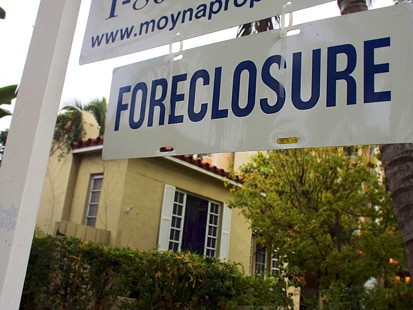
This time, she confided something in me. Something that took courage to bring up. She was having some financial problems because she can't afford her mortgage anymore. The more she told me, the angrier I got. Not at her, but at the bank. She tried to sell her home twice, and the bank refused both offers. Now the bank is foreclosing and holding HER liable for the cost of the home.

How is this possible? They pass up two perfectly good offers and then make HER pay the balance?

I asked her if she tried negotiating the debt or getting a mortgage modification. She said she didn't realize she wasn't sure how and didn't know if it was worth the effort. Bankruptcy seemed easier.

I asked her -- begged her in fact -- to let me help. I told her I'm far from a finance professional, but that maybe having someone on her team, doing a little research and even coming with her to a meeting with her loan officer, or drafting a letter, would make a difference. I told her about the Daily Asker. I suggested she has nothing to lose.

I asked for her email.

That night, I went home and dug around online. I was curious if what the bank did was legal (not in certain states, it seems, but I couldn't see anything about California). And quickly I became absorbed with hundreds of posts against her lender, Chase.

Chase is evil, Chase screwed people over. So many people have tried to sell their homes and Chase has stalled the paperwork or refused the offers, choosing instead to foreclose. Allegedly.

Here are some of those forums.


And here is Chase's loan modification site, since there are two sides to every story.


Anyway, I found a bunch of resources for her -- free legal aid, home owner's help hotlines, and info about debt negotiation -- and emailed her. Here's how I ended the message:
I understand you're exhausted, and this isn't my fight, so if you want to bow out I would totally sympathize. But if you do want to weigh your options, there's a lot more reading material out there, and bottom line: you do have options. If I can help you meet with a bank rep, write a letter, practice a negotiation, contact a journalist (I know people at the U-T and other outlets) or brainstorm, just ask.

Take care!
Hoping, really hoping her situation is resolved fairly and correctly.

And, note to self: based what I read in those forums, I've decided that until/unless there is widespread banking reform I will NEVER get a home loan with Chase. Caveat emptor.

January 23, 2010

8 reasons you simply must haggle at antique fairs

Here's an addendum to the previous post, with practical tips for getting good prices at antique fairs and similar settings.

Opening Scenario: An antique dealer buys a pendant from an estate sale for $40. That can translate into several possible resale outcomes: $120 for dude with the Rolex who's eager to seal the deal, $80 for the average passerby who never asks, $75 for the weak negotiator, $65 for the hard core asker, and $55 for the friend or dealer.

Where do you want to fall on this spectrum?

Luck, time of day, the type of venue and the merchant's attitude all play a part. But there are things you can do to bring the price down. After chatting with a few dealers and thinking about my own experiences, here are the tips I've put together for landing a super deal at an antique market.

1. Always ask. Shocker, I know. But here's why: You're supposed to.

As I passed through the booths, I eavesdropped on all the negotiations that were going on. Music to my ears! Dealers buying from dealers, experienced shoppers driving prices down, friends selling to friends, and newbies paying full price. Bottom line: dealers expect people to negotiate. Sample snippets I heard:

Dealer, to friend: Tell me what you think is reasonable and I'll tell you if it works for me.
Friend to dealer: I don't know, what's your bottom line, or what were you hoping to make?
Dealer: Well, give me a number you can live with and we'll see if it matches mine.
Friend: What kind of number would you be comfortable with?
Dealer: Well, I paid $200. Normally I'd go $450, but for you I can do $250. Even $200 if you really want it.

Buyer: How much for this?
Seller: $40, but how 'bout I just give you the lowest I can go. It's the end of the day and I want to wrap up. I can do $30.
Buyer: What about this?
Seller: Ideally $125... but I could do $80, 'cause I like you.

These kinds of discussions happened at every end of the price spectrum, which is a reminder that negotiating isn't just acceptable -- it's expected. Dealers price things with room to budge. So paying the asking price is, in my opinion, a premium paid only by the uninitiated.

(A few merchants didn't offer discounts, however, and they appeared to be as busy as their neighbors. I wonder what the best strategy is for maximizing revenues: raise prices and make people feel like they're getting a discount, pricing things so they're already rock bottom and hope buyers understand the value they're getting, or charge more than others don't negotiate, and sell fewer but more expensive things. This is probably an Econ 101 essay question. Too bad I don't remember a thing from when I took it in college, expect the supply and demand x graph. Any pricing experts out there care to shed some light on this?)

2. Don't feel guilty about negotiating. No one is on a charity mission. If a seller won't make a profit she's comfortable with, she won't sell. Unless she's awful at her job, in which case she has bigger problems than giving you $40 off a $50 vase.

3. Be fair. This is just a general rule I have when it comes to asking: not just in markets, but anywhere. It's rare I have to remind myself, because people normally stick up for themselves and ask for more than they paid, but you never know.

4. The more you know, the more powerful you are. This is kind of obvious -- I mean, if you know how much a certain pattern of china goes for on the market, you can decide to buy or not, based on the price. But remember the opposite: when you know little about an object, why trust a random merchant? I would never buy a vase claiming to be from the 19th century unless its age wasn't a factor in the pricing. Unless, of course, I could tell it really was. (Appraising antiques is a whole different topic.) On a related note:

5. If you know a little about what you're buying, try asking for the "dealer's price." If you have a general idea how much something is worth, doesn't hurt to propose what you think the merchant paid for it. Worst case she says no, or you meet half way. (This is what a seller told me. Can't personally vet for this.)

6. Always keep Goodwill at the back of your mind as you shop. This is good psychologically (since you look and act like you have options, and are hence an empowered negotiator), but also practically. With regular trips to thrift shops I've bought paintings, beautiful tea sets and Imari plates for the price of a tall latte -- objects identical to those that sell at such fairs for dollars on the penny. So if it's an antique or vintage fix you want, might as well wait until something priced right turns up a the corner thrift shop. Only splurge if it's a special, buyer's remorse opportunity. (I'm talking about splurges here -- that crazy cool couch, or whatever. If it's within my day to day budget and would cost the same new, then it's not such a tough call.)

7. Appear frugal, not cheap. "Sellers can tell the difference between being frugal and being a cheapskate. We hate cheapskates." This is what a merchant at the fair told me, word for word, when I probed her about her negotiation methods. Buying and selling in such settings is a very personal transaction, meaning that sellers will respond better to certain types of buyers. So if you seem like a cheapskate, some might be turned off. If you seem like you're on a budget, they might respect your limits.

8. Same thing goes for enthusiasm. It's common knowledge that you shouldn't be too perky and excited, or the price will float higher. But if you're too cool, too blase, maybe the seller won't be inclined to want to "win you over." Cause you're just a jerk. Sometimes sellers have sentimental attachments to their merchandise. If they think it's landing in good hands, they might be more willing to strike a bargain.

The next antique fair in San Diego is in April. Any local readers care to join me?

And, I'm curious: anyone on the selling side care to comment? Either with more tips, or contradictions/corrections?

Happy haggling,

La Roxy

Cut $5 off this thinghiemabob?

The past week has been, how you say, crazy, and the coming week is looking like a repeat. But Saturday I took a break and decompressed for a few blessed hours, and I had a lovely time.

I spent the day at an antique fair with a new friend. We've hung out a few times and she's always struck me as a fun, up-for-anything kind of spirit. My suspicions were confirmed when we meandered up and down the aisles of this massive warehouse, oohing and aahing at all the antique and vintage wares and comparing notes about our dream houses and possible past lives.

At one booth, I spotted a little bowl/candy dish/thinghimabob and asked how much it was. A mother-daughter duo were sitting calmly, chatting quietly and polishing silver. If the set around them collapsed and a 19th century British row house were erected, and Dicken's voice started narrating from the ether, I would not have blinked. Two women with porcelain skin and long locks, hunched over their goods, polishing away. Amelia Caraway was waiting for Captain Manley, she was. He was out in the Indies. He would come back and take them both to out east, but until then they had to polish, polish away. Would they earn enough that week to pay the ruthless Mr. Branford his rent? And would the elder Mrs. Caraway ever find a way to tell Amelia she was actually the daughter of the Duke of Sussex, a lovechild begotten when he was but 17 and the elder Mrs. Carraway a bonnie lass from the heath?

"$10" replied the older lady.

I was about to see if they could do $7 when the daughter cut in.

"Oh mom, not $10. That's too much. $5."

"Great! I'll take it."

"I've had it for too long. I'm ready to say bye-bye to that piece," the daughter continued.

I handed over the cash and we started talking. They had come down for the antique fair from northern California. Gave me a card. Invited me to stop by for dinner if I'm ever in Bolita.

I believe I will. Thank you, ladies.

[image via mad.lesartsdecoratifs.fr]

January 21, 2010

The adventure begins


I got the answer I was hoping for to the question I asked yesterday. The one that had me all in a tizzy.

And now, time to explain.

I'm not sure where to start, so I'll get to the point-- in a second. I'm graduating in May, and I realized recently that my options boiled down to three: I could work for a company doing a lucrative desk job in a field I didn't care about and getting depressed, I could teach, or I could take the consulting route: be my own boss, as frightening and exhilarating as that sounds, answer to no one but clients and myself, live the life I've always dreamed of... or die trying.

Perhaps you can guess, by my subtle narrative bias, which option I have decided to go for.

I will give it my best as a full time consultant, for one year. If in a year I break even or make a profit, I'll consider it a success. If not, then I'll pack up all the lessons I learned and apply for a teaching or corporate job. Mr. A is fully behind this idea, and a few friends I talked to had the same general attitude: "What were you waiting for!?" Thanks for your support. You know who you are.

All this preface to arrive at yesterday's ask: I found an office. It's in an ideal location, as part of a suite with two really cool professionals in fields similar to my own. They said they could even bounce some business my way, since our skills are complementary. I wish I could return that favor. Not yet, but one day, perhaps.

The rent was $600, which is frighteningly high when I think that's at least how much more I need to earn in a month in order to make it worth it by being in that location, as opposed to my house. At the same time, the terms were attractive -- no lease, no deposit, utilities and internet included -- the set-up and location were to die for, I do believe that working out of my house is the best path to productivity, and the only way to know if it was worth it was to give it a go.

So I visited it, liked what I saw, but kept worrying about my bottom line.

You know what I did next.

Here is the email I sent, aiming to lower the rent.
Hi Name,

I would love to move in!

It was a pleasure meeting you and Partner, and if the feeling was mutual I think it would be great to share an office.

I am a still crunching the numbers, and that's the only thing holding me back. Are you at all flexible on the rent? Would you be willing to take $500, or perhaps start at $450 for the first three months and raise it once I have a bigger client base? Or whatever the two of you think would be reasonable.

Maybe with the work you kindly offered to pass along, the visibility I'd gain by moving out of the house, and my current projects, $600 wouldn't be a problem. But I since I don't know that for sure, that seems high for making the leap into my own office.

I've looked at a few places so far, and nothing comes close to yours. And I'm confident that my boutique writing firm will be a raging success, once I get it off the ground. So I really hope we can work something out! If you want to meet again or chat on the phone, my number is XXX XXX XXXX.

Thanks,

La Roxy
I hit send, and then I waited.

That's when I wrote yesterday's tortured blog post.

I couldn't concentrate, couldn't do anything really, because it was so real I could taste it. My own office, my own start-up, a post-graduation dream come true. It would be hard. Scratch that. Excruciating. Long hours. Countless curve balls and unknowns. But if I'm young, healthy and have few responsibilities, and if I do have a career I'm passionate about which offers the potential to fly solo, how could I not go for it??? The only thing holding me back would be fear.

The reply came a few hours later:

"$450 is a bit too low unfortunately, but I'd be willing to start at $525 and stairstep it up..." The final increment would be $575, not $600, and that's where the rent would stay. He also said he thinks they can refer enough new business to me that I can cover that rent.

Over a year, that's about 5 percent off. Not an amazing reduction, and under other circumstances maybe I could have pushed it lower. But it's reasonable given there's no lease and they're offering to refer clients to me. Every contact could make a difference.

So I'm expecting to learn a ton, practice the career I love and wake up every day knowing that every minute I spend on the job is for a great cause. My future!!

As for today's asking -- I asked for work! I told people my next step is to start freelancing full time. Already got two possible job leads.

The adventure begins.

[images via ffffound]

January 16, 2010

Choosing not to ask

Today I had two opportunities ripe for asking.

I passed them up.

I wasn't sacred or lazy, but I decided it was better not to. Read on, as I am curious to hear your opinion: Was I right? Should I have pushed those prices down, after all? When do you think it's better not to ask?

Here's the first situation:

After an ongoing battle with my bathtub drain, I caved and, once again, called a pro. He is my mom's contractor and an all around stellar person. I've know his family for years.

He charged $100 for a major unclogging job, which involved replacing fixtures, bringing out three snakes and fishing out a hairball that would make any cat tremble in terror.

I totally could have asked for a break. He's a friendly guy and a good business man. But I figured that so many people overcharge. The first plumber quoted me $187 for the simplest kind of procedure, and who knows how much this more complicated one would have cost. The plumber I ended up hiring for the first attempt, back in December, charged $50 and didn't solve anything. Now here was someone who got the job done. He took his time, he was thorough and determined, gave me advice for avoiding future clogs and charged what I believe to be a fair price, based on the two above cited rates.

Why not vote with my wallet, give him a signal I appreciate his fairness, by not asking him to reduce that price?

Now that I'm not asking absolutely daily anymore, I have the latitude to choose. And I'm liking it.

In fact, an hour later I did it again.

I drove to someone's house to pick up a set of drawers we desperately need in the bedroom. I've been looking for a while, but nothing was the right size, price or look. This one had it all. I spotted it on Craigslist the day before: antique, four drawers, a beautiful warm color, for $40.

I showed up, tested the drawers, asked about its history (it was the seller's as a boy, so it's at least 40, he said), and I said I'll take it.

"You said $40?" I checked.

"That's right," the man answered.

"Ok. I won't even try to haggle. I'm saying this because I always ask for discounts. I think you're the first person in years I haven't tried to negotiate with, on Craigslist. But I love it, it's exactly what I was looking for, the price is good, and it's just simpler that way."

"Ok."

Then things got a little tricky.

I started loading it in my car when it became clear it wasn't going to fit.

"Don't worry, I can play around with the seats or maybe stuff it in the trunk."

"Where do you live?" he asked.

I told him the neighborhood.

"You know what? I'll just load it into my truck and take it."

"What? No! That's not part of the deal." I offered to pay him more or still try to make it fit, and he answered he was eager to get rid of it and that was that. His wife was coming home in 20 minutes and they had to take off, so how about we left now so he could be back in time?

Yes, reader. He ended up packing it into his truck and making the half-hour round trip to leave it at my house. If you recall, something similar happened this summer, when I bought a massive bed frame and discovered it didn't fit inside my car. I didn't enter either situation hoping or expecting such help. Yet people stepped up.

Did this happen because I didn't negotiate and seemed generally stoked to buy the furniture he'd once loved but finally outgrew? Was it because I was a woman handling heavy lifting on her own? A combination?

I gave him a bottle of wine to say thanks.

This brings me back to a wistful thought I keep having: how nice it is when we don't have to ask, demand, threaten or implore. If salaries were even, if airlines didn't leave people trapped on runways, if prices and fees were reasonable, if people met their ends of bargains and didn't leave others hanging, if fees weren't levied for absurd reasons, if politicians were forthcoming and people were considerate and steaks were always cooked right and the like. Today I got a small taste of that. A day that ran smoothly without asking.

What a treat.

January 14, 2010

How To Negotiate Your Cable Bill

Cable bills are set to rise. Some will pay up. Others will opt out. And a few people, like Josh Smith, of Wallet Pop, have asked for a discount.

Check out this blog post, in which Smith posts a priceless transcript of his online sales chat. He got his cable bill down from $177 a month for cable, phone and Internet to $127. That savings of $50 a month adds up to $1,200 for the two-year period -- all for a 10 minute phone chat.

Even if you're not into cable savings, his strategies are good for many negotiation situations.

Here are a few snippets. He starts by clearly and comfortably stating what he wants, demonstrates knowledge of their system, and threatens consequences if they don't meet his request.
Josh_: Hi Sharmin
Josh_: Thanks, I am trying to make my cable bill a bit more affordable today after it increased $65 this month
Josh_: I was just on chat with an analyst named Jeff who offered me Jeff: if you would like to be put in to a price lock guarantee package the price would be 117.80 the first year of service then just a 5.00 increase in the second year of service
Josh_: but suggested I call in to the sales number for a better deal since I had been considering dropping a service or switching to U-Verse.
When Sharmin suggests he talk to Retention, he says he already has -- and the price is still too high. Note his buddy buddy attitude and his gratitude. By the bottom of this excerpt, she's clearly on his side, trying to win his consumer loyalty and make his day.
Josh_: Unfortunately Retention's price is higher than chat and they suggested I try here again before shopping around
Sharmin: I can see what I can do for you
Sharmin: seriously
Josh_: Thanks Sharmin, I really appreciate the help
Josh_: The best retention offered was 127.75 per month
Sharmin: let me have your phone number, I am sorry they keep bouncing you around....i also do retention backup, so I can give you the best rate
Sharmin: thanks, one moment, let me take a look
Josh_: OK take your time
Sharmin: I see the two year rate for the $117.80 rate, but it looks like Jeff missed your dvr service code which is $9.95
Josh_: gotcha
Sharmin: now, I can lock in the rate for 2 solid years with no $5 step up
Sharmin: 127.75 per month would be your rate for 2 solid years
Josh_: Sounds like a plan!
Josh_: Thanks Sharmin
Sharmin: not a problem, I can also backdate it to the date your last bill printed
Josh_: Wow, you rock!
That's what I call win-win.

Read the whole transcript, plus practical info about cable rates, here.

Today's asking update coming soon. But wanted to share this in the meantime.

Toodles!

November 18, 2009

Why are well paid women so bad at negotiating their salaries?


You've probably already heard the news, but just in case, lemme spell it out: Women earn less than men working the same jobs.

On Monday the NYT blogged about an interesting study conducted by the compensation website Payscale.

The findings were twofold. First, pay disparities between men and women increase with salary. Thus the difference in compensation between higher earning women (in the study, above $100k) and their male counterparts is greater than that between lower earning women and their male counterparts. Second, when one adjusts for factors besides gender that can influence compensation (these aren't specified, but I'm guessing it's stuff like quantifiable performance results, cost of living, schedule availability, time worked, seniority, periodic performance reviews, etc), then the pay gap shrinks.

Regarding the first finding:

If it seems odd that successful (in this case, highly compensated) women are worse at narrowing the gender gap than those who earn less, Payscale offers this theory: for high paying jobs, performance is a more subjective matter. An engineer banking $67k per year has some tasks to fulfill, and success in meeting those tasks results in higher or lower compensation. But the criteria for judging a CEO or law firm partner or marketing veep are fuzzier. So, Payscale proposes, there's more room for latent value judgments/discrimination.
In other words [...] jobs in which quality is easier to measure are more likely to be compensated based on merit, so equally qualified men and women are likely to receive equal pay. On the other hand, in jobs where quality measures are more subjective, meritocracy may not rule, and men may be better compensated for reasons other than their qualifications. For example, perhaps men are subconsciously viewed as more competent than women, or are more adept at negotiating for raises.
Frankly, I don't buy it. Maybe I'm just a grad student who knows little about the business world, but isn't success in many high paying jobs just as quantifiable as in low paying ones? I mean, yes there are the gurus who get paid to sit around and lend their name to a brand, but aside from those exceptions, isn't performance very measurable? How many clients did you bring in? How much did the stock grow when you were in charge? How well did your revenue withstand the recession? etc. Please correct me if I'm wrong, business-savvy readers.

But if that's true, then my very off-the-cuff speculations are as follows:

1) People tend to be rich and successful at the end of their careers. So those top earners are older. And perhaps those older women are inured to the cult of acquiescence. Women starting their careers today, hence earning less, are doing a lot more asking, I hope. That would explain the smaller gaps in the lower earning bracket. With time, I hope to see the gap close at all levels of the compensation slope.

2) But what if the disparities are not due to where these survey responders were in their careers, but rather about the positions themselves, or the people in them? Indeed, what if there's something about engineering or other 67k jobs that helps foster equal pay, and something about the jobs at the top earning bracket that leads to discrimination?

Here's the most interesting point the writer, Catherine Rampell, makes:
The implication is that in most jobs where a wage gap exists, it is probably not due to overt discrimination, with bosses deciding, Mad-Men-style, that women should receive unequal pay for equal work. Rather, in most jobs, the different career choices that men and women make — or perhaps the different career opportunities men and women have available to them — account for big differences in pay, says Al Lee, PayScale’s director of quantitative analysis.
I image that higher paying, higher powered jobs have more room for such choices. Who do you befriend. Who's your mentor. Is your title worded the right way. How do you present yourself, verbally and nonverbally, in the job application process. Did you play golf with the right person. Are you perceived as competitive or a softie. Is your spouse staying at home and caring for the kids or must you cut back on overtime to do that. Is your office strategically located.

Etc.


When you're at a low or mid-level job, maybe those difference don't count for much. But in high powered, high stakes positions, all those nuances and unspoken attributes converge to create something called "value."

And somehow, women are missing that point.

I'm sure there's more to it than this. The thoughts are still fresh on my mind. Help me out. What do you think? What am I missing? What explanations do you see?

November 17, 2009

A delicate professional situation

I asked for something delicate at work today.

I don't know the results yet, and I'm not quite comfortable discussing the issue yet, since I know some people from work read this blog, or might in the future.

(Yes, as a semi-anonymous blogger I've done a fine job of revealing my identity to the people who probably shouldn't know it, and keeping my identity an airtight secret from those who probably should. No wonder I failed the foreign service exam. I'd make an disastrous spy.)

Before I write about that, I want to say something else.

I've wondered recently, ever since spending some time in an office setting again, if this blog could backfire. Once my name gets out there, as undoubtedly it will one day, could potential employers feel solidarity with the bosses I've written about and decide not to hire me for that reason? Could they worry that I've started another blabbermouthed venture I'm not telling them about? Of course, I don't think I'm writing anything too touchy or objectionable, but how can I know what a potential employer would think?

So what do you think, readers? Am I screwing myself?

No matter what I'll keep writing this, because I think the topics of women's compensation, negotiation/asking skills and workplace opportunities (which guides this blog's mission above and beyond the fun adventures in asking) are too crucial to fall silent about.

But I can't help but wonder.